These resources target coaches with corporate roots who are building a business, not just a client list. Each one addresses a specific moment in that process. Find the one that describes where you are right now.

Stage 1: Still deciding
The strategic checklist for making the leap from executive to coach — without leaving money or credibility on the table.
This is for you if
you're still in your corporate role, weighing whether the business side of coaching will actually work for you.
Stage 2: Launched
Five assets your corporate background has already given you that no AI can replicate — and why they become more valuable as the tools get smarter.
This is for you if
you've launched and you're trying to articulate why a client should hire you over a cheaper option.
Stage 3: Building scale
For coaches who are booked but burning out. A framework to stop running the business and start building it.
This is for you if
you're coaching but your business isn't built yet — doing the work without the infrastructure to hold it.

.png)


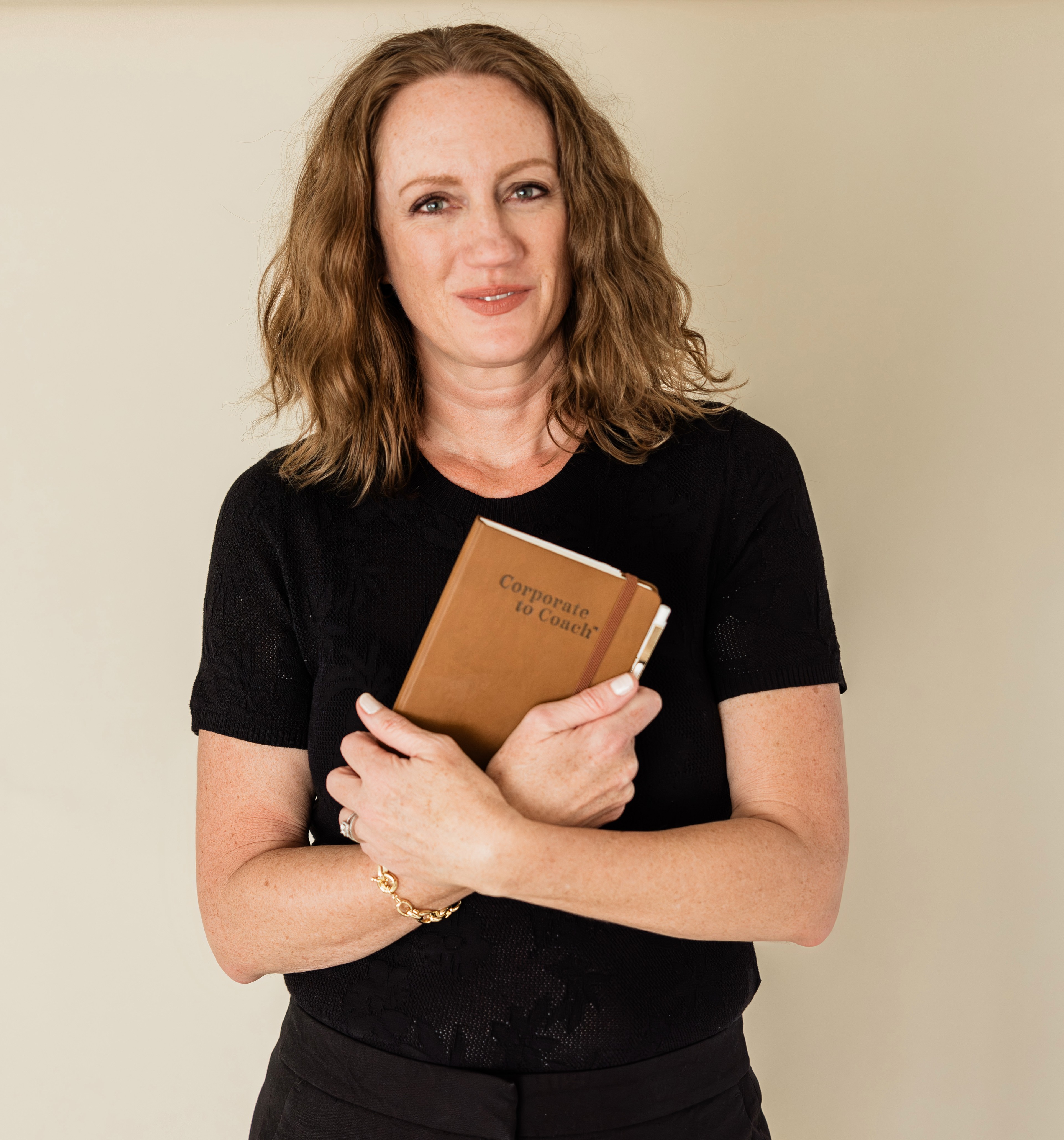
Elissa Kelly spent two decades in Fortune 100 risk management, rising to Chief Product Officer of a $4 billion insurance company before building her own coaching practice. She knows what the decision costs, what the first year looks like, and what separates the coaches who build sustainable businesses from the ones who stall.
These resources distill what she learned. Start with the one that fits where you are today.
Answers to what coaches from corporate want to know before they start building.
The first question isn't how to get clients — it's whether the business model works for your situation. That means looking at your financial runway, credibility positioning, and how you plan to generate leads before you generate revenue. Most coaches skip the business audit and go straight to branding. That's how you end up with a beautiful website and an empty calendar.
It's not a legal requirement, but it functions like one in the executive coaching market. Organizational buyers — HR departments, leadership development teams, clients who pay $400 or more per hour — use ICF credentials as a baseline filter. Without one, you're pitching harder and pricing lower. Most coaches targeting corporate clients pursue ACC or PCC certification early, not because coaching quality requires it, but because client acquisition does.
Yes, and many coaches do. The constraints are real: energy, time, and the appearance of a conflict of interest if your employer operates in the same space. The advantage is financial buffer — you're building while your risk is still managed. The variable to watch is credibility lag. Clients hiring coaches who are still employed often wonder whether you've actually made the leap. How you position your transition matters as much as the timing.
The client profile and the buying decision. Executive coaches work with people who already have professional success — they're solving business-track problems: managing a leadership transition, building a team, deciding whether to leave corporate, launching a practice. The buyer is often sophisticated, pressed for time, and skeptical of vague outcome promises. That changes everything about how you position, price, and sell.
Some coaches close a client in the first month; most take six to eighteen months to reach consistent revenue. The variable isn't coaching quality — it's how deliberately you're working your existing network and whether your positioning is specific enough to generate referrals. "I coach executives" is a conversation. "I work with former corporate leaders building coaching businesses" is a referral.
AI can produce a coaching conversation. It can't produce the credibility of having left a Fortune 100 role to build something yourself, or the context of knowing what a leadership team dynamic actually feels like from the inside. The coaches most at risk are those with the least specificity — generalist positioning, low-differentiation methods, no track record. Coaches with real industry context, established relationships, and a clear client niche are more durable than most.